TryShadowing
Shadow YouTube. Speak English.
Home
Browse
Dictation
NEW
My Library
en
0
days
Sign in
AVOID Repeating These Words… — English with Lucy shadowing | TryShadowing
TryShadowing
Shadow YouTube. Speak English.
Home
Browse
Dictation
NEW
My Library
en
0
days
Sign in
Home
Browse
English with Lucy
AVOID Repeating These Words in Daily English Conversation - Use These Alternative Words
AVOID Repeating These Words in Daily English Conversation - Use These Alternative Words
English with Lucy
·
15:41 · Aug 5, 2020
Start Shadowing
0:00
0:00
Record
×1
1x
VI
EN
JA
KO
ZH
FR
PT
TH
IT
DE
IPA
Pronunciation scoring isn't supported on this browser — you can still record and listen back.
-
Hello
everyone
and
welcome
back
to
English
with
Lucy.
Translating…
Turn on Record to capture your voice and get scored
Smart
Karaoke
Original
Line
1
/283
0:00
- Hello everyone and welcome back to English with Lucy.
0:03
Today I'm going to talk to you about five very boring, overused words, yes,
0:09
no, sorry, thank you, and okay.
0:12
These are words that we use all the time in daily English conversation,
0:17
and I'm going to give you some more advanced,
0:19
more specialised alternatives that you can use on a daily basis.
0:24
This is perfect for you,
0:26
if you don't want to repeat yourself over and over again.
0:30
There's nothing worse than feeling that you're repeating yourself.
0:33
Well, actually, there might be some worse things in life.
0:36
Before we get started,
0:37
I would just like to thank the sponsor of today's video, it is Skillshare.
0:42
Skillshare offers creative classes designed for real life
0:46
and all of the circumstances
0:47
that come with it.
0:48
These lessons can help you stay inspired,
0:51
continue with your learning journey and introduce you to a community of millions.
0:55
There are so many classes you can take, languages, web development, graphic design,
1:02
creative writing, you don't have to just focus on languages.
1:06
Spontaneous acts of creativity may help break up the routine of a day spent
1:12
indoors.
1:12
I have been taking a class on calligraphy essentials with world-renowned calligraphy expert,
1:17
Seb Lester, firstly because I find it so relaxing,
1:20
and also because I want to use it to write thank you letters after
1:24
our wedding.
1:24
Skillshare is curated specifically for learning, meaning there are no ads,
1:29
and they are always launching new premium classes so you can stay focused,
1:34
and follow wherever your creativity takes you.
1:37
Plus, it's less than $10 per month with an annual subscription.
1:41
The first 1000 of my subscribers to click on the link in the description
1:46
box will get a two-month free trial of premium membership,
1:50
so you can explore your creativity.
1:52
Right, let's get started with the lesson.
1:55
Okay, let's start with the word yes.
1:58
I'm pretty confident that most of you know this word,
2:01
I bet you can't even remember when you learnt this word.
2:04
In English, we have lots of alternatives for this word,
2:08
but learners of English will often find themselves just using the word yes,
2:14
instead of the alternatives.
2:16
I have got seven for you today, the first one is this one, yep,
2:25
yep.
2:25
Now this is usually used in spoken English, and it's quite informal.
2:29
It's a non-standard spelling of yes, and it represents the pronunciation, yep, yep.
2:36
"Have you done your homework?"
2:37
"Yep, yep, I have."
2:40
We use it all the time, especially in casual conversations,
2:44
but when I was teaching students in person,
2:47
I would use it
2:48
and they would look at me with a face of confusion.
2:51
It's not a word that you often find in textbooks,
2:54
an alternative for this which is used more in America,
2:57
you'll still find it in Britain,
2:58
but because it's a spoken word rather than a written word,
3:02
this next alternative represents the American pronunciation more, its, yap, yap.
3:09
We also have number three, which is yeah, yeah.
3:13
This can be spelled in a variety of ways,
3:15
but it's normally used in spoken English,
3:18
and it is just a casual way of saying yes,
3:22
and I imagine if we did a study of every single sentence uttered by
3:28
English speakers across the world,
3:31
I feel that yeah, would be more common than yes.
3:35
I feel that I hear it more than yes.
3:38
Yes has lots of emphasis, it's more formal.
3:41
Yeah, is more casual, and it's easier to say in my opinion.
3:44
Now, number four, is slightly more formal,
3:48
and it is used to respond usually to a request.
3:52
It's certainly, certainly.
3:56
We also have the more American version which is sure, sure.
4:02
"Can you drive me home today?"
4:03
"Sure, certainly."
4:05
Now, because in the UK,
4:07
we watch a lot of American TV programmes and American films,
4:11
we are becoming more used to using Americanisms like sure,
4:16
so it's definitely something that we will understand and potentially use.
4:19
An additional alternative number six is, of course, of course.
4:24
Now the last one, or should I say the last three,
4:27
but I've grouped them into one, they're not necessarily a direct translation of yes,
4:32
but they're used in place of yes.
4:34
They are I do, I will, and I have,
4:37
and there are many others as well.
4:39
I'm talking about echoing a question.
4:42
For example, "Do you like kittens?"
4:44
Instead of saying, yes, you could say I do.
4:48
"Will you have a kitten soon?"
4:50
"Yes, I will."
4:52
"Have you bought an excessive amount of cute kitten toys?"
4:56
Yes or I have.
4:59
I just thought I'd mention that one there,
5:01
so if you find yourself saying yes, a lot,
5:03
you can switch it up and say something different.
5:06
Now, what comes next?
5:07
I'll give you a few seconds to guess, it's no.
5:11
So in the yes section I mentioned yep and yap,
5:15
we have that informal variant of no as well, it is nope, nope.
5:21
"Did you do your homework?"
5:23
"Nope, nope."
5:25
Again, as with yep, I think that we use nope, more than no.
5:31
I would like a scientist to do a study into this,
5:34
it's something I want to know about,
5:35
but I don't care enough to do it myself.
5:39
Another alternative, which is potentially used more in America, and it's definitely not formal,
5:46
you would not want to say this to your boss, nah, nah.
5:51
I use this a lot actually, I'd use it with my friends,
5:54
I use it to express a bit of disgust.
5:57
"Do you want this for dinner?"
6:00
"Urgh, nah, nah" I might also use it
6:01
if I'm expressing a bit of disbelief.
6:04
"Nah, no I don't believe that, nah" Another one which is very forceful,
6:10
no way, no way.
6:14
There is no way in hell that I'm going to do that, no way.
6:17
Now, I'm not sure if you know this,
6:18
but British people love to say please, thank you, and sorry, sorry,
6:24
especially all the time, so it should come as no surprise, that sorry,
6:28
is a perfectly fine alternative for no.
6:31
This is global, but especially in Britain.
6:34
"Are you coming tonight?"
6:36
"Sorry."
6:37
I don't even have to say no, just a sorry, we'll do.
6:40
Something that's slightly less strong is not likely, not likely,
6:45
rather than saying it's not likely, just not likely, will do.
6:49
"Do you think you'll get a promotion this year?"
6:51
"Not likely, no, I don't think "that I will get a promotion this year."
6:56
Now another really forceful one, we can say absolutely not, or certainly not.
7:02
I love that word, and I'm noticing it growing in popularity at the moment.
7:06
Everyone seems to be saying absolutely, so get on board the absolutely train,
7:11
absolutely not.
7:13
"Will you go out with him again?"
7:14
"Absolutely not, certainly not."
7:17
If you want to express no in another apologetic way we have, unfortunately not,
7:23
unfortunately not.
7:24
Or we also have, I'm afraid not, I'm afraid not,
7:28
and don't get this confused,
7:30
because to be afraid of something is to be scared of something,
7:34
but if I say I'm afraid not, it means I'm sorry.
7:38
You know, I'm scared to tell you this because I'm so sorry about it,
7:42
but no.
7:43
We also have, if only, if only, short for if only I could.
7:49
"Can you come tonight?"
7:50
"If only, if only I could but I can't."
7:53
It's implying that you can't,
7:55
and finally one to use
7:57
if you're offered something
7:58
or you're offered an experience
8:00
and you want to decline it,
8:02
I'll pass, short for I'll pass on that, no, thank you.
8:07
Right, let's move on to Britain's favourite word, sorry.
8:11
I've got five alternatives for you.
8:14
The first one is I didn't mean it or I didn't mean to.
8:18
Most of these can be used in conjunction with sorry, so don't worry,
8:23
Brits watching, you can still use your favourite word.
8:26
"I didn't mean to run over your toe."
8:28
To run over something implies
8:30
that you have gone over it with your car wheel.
8:33
Another one, it was wrong of me.
8:36
"It was wrong of me to put your white work shirts "in with my
8:40
red knickers."
8:42
You've got pink work shirts now.
8:44
Alternatively, you could say I was wrong to.
8:47
"I was wrong to go to the concert without you,
8:50
"to go and see your favourite band without you."
8:52
Also we have I should never have.
8:55
"I should never have worn white on your wedding day."
9:00
True story, I didn't wear white,
9:02
but I went to a wedding
9:03
and a girl was wearing a white bridal-style dress,
9:08
is this okay in your culture?
9:10
Let me know because it's not okay in ours,
9:13
didn't say anything just judged silently.
9:16
Now the last one, this is definitely an Americanism,
9:19
it's come over to the UK, and it's very,
9:22
very casual and can sometimes be considered obnoxious
9:25
if used in an incorrect situation
9:27
so be careful with it,
9:28
but it is my bad, my bad.
9:32
Now I remember being a young child and hearing this on programmes like Friends,
9:37
and I didn't really understand what it meant.
9:39
I was always taught to say sorry, of course,
9:41
because I grew up in Britain and it's our favourite word,
9:44
but I remember hearing my bad and thinking your bad, like you are bad?
9:48
No, my bad, it's a very casual, fairly impolite way of saying sorry,
9:54
it's okay to use it with your friends
9:56
and if it's not a serious mistake.
9:59
Okay, let's move on to thank you, thank you.
10:02
I have got eight alternatives for thank you, lots to do here.
10:07
The first one is you're a star, you're a star,
10:11
or you're an absolute star, we're using the absolute word.
10:16
Instead of saying thank you, we're just telling someone that they're so wonderful,
10:19
and we appreciate them so much.
10:21
Very similar is you're a life-saver, you're a life-saver.
10:26
So that means that somebody has done something
10:29
that has saved you a lot of trouble.
10:31
Maybe you left your phone on a train,
10:35
and somebody managed to get in contact with you
10:37
and give it back to you,
10:38
"Ah, you're a lifesaver, you've saved my life."
10:41
"You've brought me my smartphone back and that is my life."
10:45
Another way of showing that you really appreciate someone,
10:47
I don't know what I'd do without you.
10:49
I don't know what I'd do without you, very similar to life-saver.
10:53
Another one which is a good way to respond to a compliment
10:56
because if you're lucky enough to receive lots of compliments,
11:00
you might find yourself saying thank you, thanks, thank you, thanks all the time,
11:05
and that's a wonderful problem to have.
11:07
But another phrase that we can use is, I appreciate that, I appreciate it,
11:13
I appreciate that.
11:14
Yeah, it's a nice one,
11:15
so next time you receive lots and lots of compliments, you can switch between,
11:18
thank you, I appreciate that, thanks, I appreciate it.
11:22
Ah, you're just so lucky to have me aren't you?
11:24
I have equipped you for your next influx of compliments.
11:30
You're welcome.
11:31
Now something you can say if someone has made an extra effort for you,
11:35
if they've gone above and beyond that means to make an extra effort,
11:39
you can say you shouldn't have, you shouldn't have and this doesn't literally mean,
11:45
you shouldn't have done something, it's obviously done with a smile.
11:49
It means you shouldn't have gone to so much effort, thank you so much.
11:53
Finally, we have three informal ones.
11:56
One is extremely British, and there was actually a study, the other day,
12:01
the other day, I mean a couple of years ago in a very unreliable
12:05
newspaper,
12:05
but I enjoyed reading it, saying that this word has now replaced thank you.
12:11
It is cheers, cheers,
12:14
and this is typically something we say
12:15
when we bash our drinks together before drinking them,
12:18
but now it's something we use instead of thank you.
12:21
"Cheers, cheers, mate, thank you for that."
12:24
Another one, which I don't like, and I've said this before in a video,
12:27
I don't like it.
12:28
At nurseries and at schools,
12:30
they encourage the children to say ta instead of thank you,
12:34
because it's easier to say, but when someone says, "Ah, tah, tah very much."
12:39
I just think it sounds like they're not putting in enough effort,
12:41
but maybe I just need to get over myself,
12:43
and then the last one is fab, short for fabulous.
12:48
It's just a way of saying, great, thank you so much fab, that's fab.
12:52
Okay, lastly, on to overused word number five, it's okay, okay.
12:59
I have got five here for you.
13:02
The first one is okey-dokey, okey-dokey,
13:05
or is it Ned Flanders from the Simpsons that says okely-dokely,
13:10
maybe don't say that, well, you can.
13:13
Okey-dokey is very common.
13:15
It's definitely something that's informal.
13:18
Use it amongst friends.
13:20
Potentially don't write it in formal academic writing.
13:24
Definitely don't use it in formal academic writing.
13:27
Another very plain and simple alternative is all right, all right, okay, all right,
13:32
they are almost exactly the same.
13:34
We also have very well,
13:37
very well which almost implies a little bit of displeasure.
13:42
"Very well if that's what you want."
13:45
Next, we have right-oh, right-oh,
13:47
and this is one that has come from my fiance,
13:50
I asked him just before writing this script,
13:52
if he can think of any other alternatives for okay,
13:56
and he said right-oh
13:57
and this is definitely one
13:59
that is used by the older generation,
14:01
I think, but I think it's a lovely one,
14:03
and these older kind of more old fashioned words do come back in fashion.
14:08
If I were to say to him, "Oh, by the way,
14:10
"my mom's coming over for lunch."
14:12
"Right-oh, good, okay."
14:14
And the last one,
14:15
one that is very commonly used in Britain when we don't want to express,
14:19
positive or negative emotions about something, fair enough, fair enough, okay,
14:25
I have no feelings about this.
14:27
Right, that was it for today's lesson.
14:30
I hope you enjoyed it, and I hope you learned something.
14:33
Please feel free to share any other alternatives that you can think of,
14:38
or any alternatives that you use in your own language
14:41
that might not necessarily translate into English,
14:43
but might be interesting.
14:44
I'm always interested in where you're from and what kind of words you use.
14:49
Don't forget to check out Skillshare,
14:51
the first 1000 of my students to click on the link in the description
14:54
box will get a two-month free trial of premium membership,
14:59
and don't forget to connect with me on all of my social media,
15:02
you've got my Facebook, my Instagram, my Twitter,
15:05
and you can now receive emails from me,
15:07
that link is in the description box.
15:10
I also have my personal vlogging channel,
15:12
there will be a new vlog there very soon,
15:14
I will see you soon for another lesson, mwah. (gentle music)
Like
Share
English with Lucy
View all →
B1
English lessons
Karaoke
20:12
ONE language, THREE accents - UK vs. USA vs. AUS English! (+ Free PDF)
English with Lucy
4
B1
English lessons
Karaoke
8:51
DO NOT say "you're welcome"! Respond to "thank you" PROPERLY!
English with Lucy
B1
English lessons
16:36
SELF INTRODUCTION | How to Introduce Yourself in English | Tell Me About Yourself Interview Answer
English with Lucy
B1
English lessons
Karaoke
12:51
20 Different Ways To Wish ‘Happy Birthday’ & 'Happy Anniversary' (+ Free PDF & Quiz)
English with Lucy
B1
English lessons
Karaoke
10:21
5 things to practice every day to improve your English communication skills
English with Lucy
B1
English lessons
Karaoke
29:52
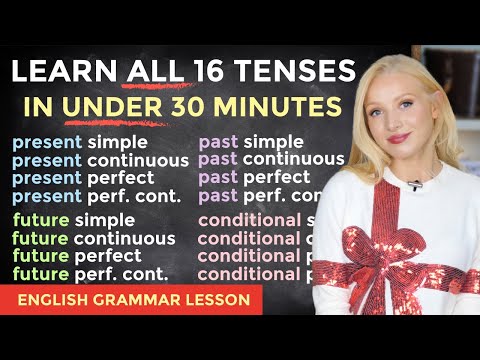
Learn ALL 16 TENSES Easily in under 30 Minutes - Present, Past, Future, Conditional +Free PDF & Quiz
English with Lucy
B1
English lessons
11:18
DO NOT say "how are you?"! Ask the question in a better way!
English with Lucy
B1
English lessons
Karaoke
9:08
You are absolutely fluent in English if you can understand these
English with Lucy
Suggested videos
B1
English lessons
Karaoke
20:12
ONE language, THREE accents - UK vs. USA vs. AUS English! (+ Free PDF)
English with Lucy
4
B1
English lessons
Karaoke
8:51
DO NOT say "you're welcome"! Respond to "thank you" PROPERLY!
English with Lucy
B1
English lessons
16:36
SELF INTRODUCTION | How to Introduce Yourself in English | Tell Me About Yourself Interview Answer
English with Lucy
B1
English lessons
Karaoke
12:51
20 Different Ways To Wish ‘Happy Birthday’ & 'Happy Anniversary' (+ Free PDF & Quiz)
English with Lucy
B1
English lessons
Karaoke
10:21
5 things to practice every day to improve your English communication skills
English with Lucy
B1
English lessons
Karaoke
29:52
Learn ALL 16 TENSES Easily in under 30 Minutes - Present, Past, Future, Conditional +Free PDF & Quiz
English with Lucy
B1
English lessons
11:18
DO NOT say "how are you?"! Ask the question in a better way!
English with Lucy
B1
English lessons
Karaoke
9:08
You are absolutely fluent in English if you can understand these
English with Lucy