Pronunciation scoring isn't supported on this browser — you can still record and listen back.
Intoday'sEnglishlesson,
Translating…
Turn on Record to capture your voice and get scored
Line 1/256
Summary
Learn 30 everyday responses to "What are you doing this weekend?" through shadowing, focusing on pronunciation, intonation, and practical vocabulary for natural conversation.
Key vocabulary
phrasesintonationshadowingrepetitionbeat the crowdsmeal prepmatineeget-togetherget awaybinge-watch
Grammar notes
Present continuous (I'm + -ing form) for immediate future plans — used throughout to describe weekend activities. Example: "I'm just taking it easy this weekend" and "I'm going shopping early Saturday morning to beat the crowds."
Future auxiliary + infinitive (going to + verb) — used to express planned weekend activities with slightly more future distance. Example: "I'm going to sleep in and not set an alarm" and "I'm going to have a lazy weekend and binge-watch a new series."
Reduced auxiliary "to" in fast speech — the preposition "to" is pronounced as "da" when followed by a definite article. Example: "go to the park" becomes "go da the park" in natural American English.
About this video
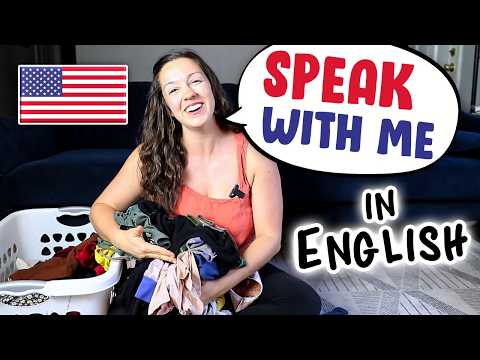
This video teaches learners to answer the common question "What are you doing this weekend?" through a structured shadowing lesson featuring 30 realistic responses. Vanessa models each phrase twice, with pauses in between for learners to repeat aloud—from simple responses like "Not much" to more complex sentences such as "I'm meeting a few friends for brunch at our favorite lunch spot." The instructor draws attention to specific pronunciation features (the flapped T in "meeting," the reduced "to" sound as "da," and the slurred "maintenance"), intonation patterns (the embarrassed tone when saying "I'm planning things last minute, as usual"), and phrasal verb distinctions (catch up with a friend versus catch up on chores).
This is excellent shadowing material because Vanessa speaks at a natural conversational pace without rushing, her American English pronunciation is clear and consistent, and she explicitly pauses for repetition. The phrasing covers everyday vocabulary and grammar patterns that intermediate learners encounter in real social situations. The video suits B1 learners who want to improve fluency and naturalness in casual conversation, build active vocabulary for weekend activities, and refine their accent through listening to and imitating native speech rhythms and intonation patterns.
Idioms & expressions
beat the crowds — arrive before the large group of people; get somewhere early to avoid congestion or lines. Example: "I'm going shopping early Saturday morning to beat the crowds."
catch up with — spend time reconnecting with someone you haven't seen in a while; maintain or restore a relationship. Example: "I'm catching up with a friend I haven't seen in a while."
catch up on — complete or do something you have been too busy to do; bring yourself current. Example: "I've had a busy week, and I just need to catch up on some chores."
get away — leave for a short trip or vacation to escape routine. Example: "I'm going to get away for the weekend and travel out of state."
binge-watch — watch multiple episodes of a TV series continuously. Example: "I'm going to have a lazy weekend and binge-watch a new series on Netflix."
get together — meet socially; a casual gathering or small party. Example: "I'm hosting a small get-together at my place for some friends."
take someone to dinner — treat someone by paying for a meal at a restaurant. Example: "My husband's going to treat me to dinner."