
How to Practice English Speaking (Free, Even With No One to Talk To)
No speaking partner? You can still get fluent. Here's a simple, free way to practice English speaking on your own — using real videos and your own voice.
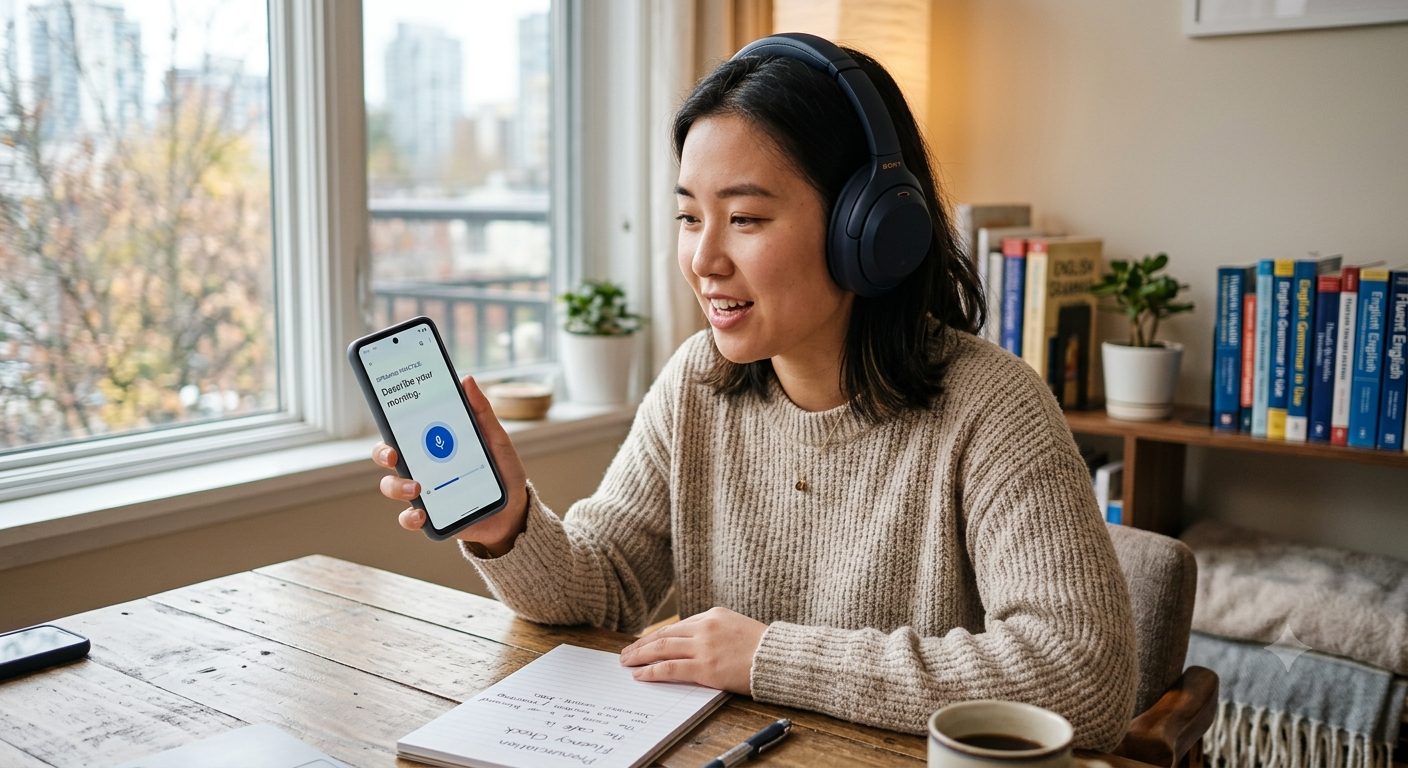
The hardest part of learning English isn't grammar or vocabulary — it's speaking. And most learners have the same problem: no one to practice with. The good news? You don't need a partner. Here's how to practice English speaking on your own, for free, and actually build fluency.
Why speaking is the hardest skill to self-study
You can read, listen and study grammar alone easily. But speaking needs a mouth that's trained — muscles that know the rhythm, stress and sounds of English. You can't build that by memorizing rules; you build it by speaking out loud, a lot. The trick is having something correct to copy.
The method: shadowing
Shadowing means listening to a native speaker and repeating immediately, matching their pronunciation, rhythm and intonation. Instead of inventing sentences (which reinforces your mistakes), you copy real, correct speech — so your mouth learns the natural flow of English and your accent improves fast.
On TryShadowing you can practice English speaking with any YouTube video: paste a link, and each line becomes a short sentence you repeat, record, and get scored on for pronunciation.
How to practice English speaking, step by step
- Pick content you enjoy at your level — a talk, vlog, interview or lesson. If you like it, you'll come back tomorrow.
- Listen to one line, then say it out loud right away, copying the speaker exactly — speed, pauses, stress.
- Record yourself and compare. Notice where your rhythm drifts.
- Repeat the same line 3–5 times until it feels smooth. Quality beats quantity.
- Do 5–10 minutes a day. Daily beats a long weekly session — fluency is a habit.
Tips to sound more natural
- Copy the music, not just the words. English has stress and melody; flat, word-by-word speech sounds robotic.
- Exaggerate at first. Over-copy the intonation; it'll settle into something natural.
- Don't chase perfection line one. Get 80% smooth, move on, and let repetition do the rest.
- Record and listen back. Hearing yourself is uncomfortable but it's where the fastest gains hide.
Common mistakes
- Reading silently. If your mouth isn't moving, it isn't speaking practice.
- Only studying, never producing. Input alone won't make you fluent — you must speak.
- Practicing sentences that are too long. Short lines you can nail build more confidence than long ones you fumble.
Pair it with listening
Speaking and listening grow together. After a speaking session, try a quick dictation set — listen and type each sentence, scored word by word. It sharpens your ear so you catch the sounds you then reproduce when you shadow.
Start now — it's free
You don't need a tutor or a partner to practice English speaking. Open speaking practice, pick a video you like, and shadow your first line today.