Turn on Record to capture your voice and get scored
Line 1/71
Summary
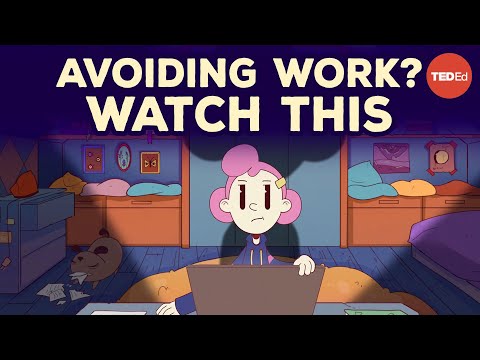
A TED-Ed lesson exploring the science behind "broken heart syndrome," how grief and stress hormones physically affect the heart, and whether heartbreak can truly be deadly.
Modal verb for possibility — "can" — used throughout to express general possibility or capability, including in rhetorical questions. Example: "Can you actually die from a broken heart?"
Passive voice — used to describe medical processes and discoveries objectively, distancing the action from any single agent. Example: "This was originally labeled by Japanese doctors in 1990."
Cause-and-effect linking with "since" — used to introduce a logical reason rather than a time clause, common in academic English. Example: "And since it's unable to pump effectively, blood begins to pool."
Concessive contrast with "while" — used to acknowledge one fact before introducing a contrasting or more significant one. Example: "But while all these factors can reduce life expectancy, there's another condition where powerful emotions can directly endanger someone's life."
About this video
This TED-Ed video investigates a surprisingly literal question: can you actually die from a broken heart? Narrator Roni Shanoada opens with the widowhood effect — the finding that a surviving spouse's risk of dying can jump by up to 90% in the three months after their partner's death — and then dives into the medical condition called takotsubo cardiomyopathy, named by Japanese doctors in 1990 after an octopus trap because of the distinctive balloon shape the left ventricle takes on. The video explains, step by step, how a flood of epinephrine and norepinephrine exhausts the ventricle, can trigger spasms in the heart's blood vessels, and produces chest pain and shortness of breath nearly indistinguishable from a heart attack — all without any arterial blockage.
For shadowing practice, this video is an excellent choice. The narration is delivered in a clear, measured American English accent at a moderate pace, with natural pauses between ideas, making it easy to chunk and repeat. The sentence structures are varied — mixing short punchy questions with longer technical explanations — so learners get exposure to both styles.
It suits B2–C1 learners who want to expand academic and medical vocabulary while working on precise pronunciation of multi-syllable scientific terms (e.g., cardiomyopathy, norepinephrine, postmenopausal). Shadowers will gain confidence with formal expository English, conditional structures, and the kind of cause-and-effect language common in lectures, documentaries, and academic writing.
Idioms & expressions
bring on — to cause something (especially something unpleasant) to happen; "Grief brings on a whole host of strong emotions."
a whole host of — a large number or wide variety of; used for emphasis with uncountable or plural nouns.
keep up with — to manage to do something at the required rate or standard, without falling behind; "it can make it hard for a person to keep up with their daily health needs."
make a full recovery — to return completely to good health after illness or injury; "in most cases patients make a full recovery."
ups and downs — the mixture of good and bad experiences in life or in a situation; "our bodies are sensitive to the ups and downs of our emotions."
strike — (of something bad) to happen suddenly and unexpectedly; "We also don't know exactly when it will strike."