Present perfect for documented facts — Used to report scientific observations with ongoing relevance: "They've been documented using this skill to eat hyenas, alligators, and even humans, whole."
Passive voice for describing biological processes — Common in science narration to keep focus on the subject being described: "their skin is packed with a potent neurotoxin."
Subordinate clauses with 'since' — Used both for causation and time, requiring learners to judge meaning from context: "since modified proteins in their nerve cells prevent the toxin from binding."
Participle phrases as noun modifiers — Compressed descriptive phrases that add detail efficiently: "inward-facing vertebral spines" and "fast-acting neurotoxins."
About this video
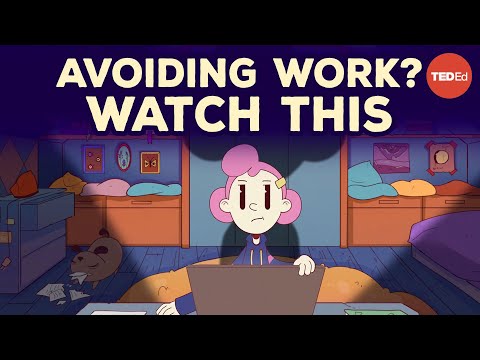
This TED-Ed video by Niko Zlotnik dives into the extraordinary anatomical and behavioral adaptations that make snakes such versatile predators. It opens with a vivid real-world puzzle: an eastern kingsnake swallowing a Texas rat snake that is actually longer than it is. From there, the video explores how unconnected jaw bones joined by elastic ligaments, sharp curved teeth, and repositionable airways let most snakes consume prey whole. Standout moments include reticulated pythons achieving 180-degree gapes to swallow hyenas and humans, African egg-eating snakes that pierce eggshells with inward-facing vertebral spines inside their esophagi, and the clever trick the kingsnake uses at the end — compressing its spine to fold a larger snake into a zig-zag shape inside its own digestive tract.
For shadowing practice, this video is an excellent choice. The narration is delivered in a clear, measured American English accent at a comfortable pace, with rich academic vocabulary embedded in short, punchy sentences. The language alternates naturally between scientific description and vivid storytelling, giving learners practice with both formal and engaging registers.
This video suits upper-intermediate to advanced learners (B2–C1). Shadowers will expand vocabulary in biology and anatomy, practice stress patterns on multi-syllable scientific terms (e.g., neurotoxin, esophagi, vertebral), and absorb natural transitions and contrast phrases used in English science communication.
Idioms & expressions
make a show of (doing something) — to do something in a very obvious or dramatic way: used when describing snakes that visibly and dramatically swallow prey whole.
hang out — to spend time relaxed in a place: "it allows them to hang out in ant colonies, snacking on their inhabitants without being attacked."
snacking on — casually eating small amounts; here used humorously to describe blindsnakes feeding on ants.
hard to swallow — difficult to believe or accept (also a pun on literal swallowing): "Sorry, we know the truth can be hard to swallow."
go after — to chase or pursue as prey: "Garter snakes, meanwhile, go after western newts."
pry off — to remove something by force: "crab-eating snakes often pry their prey's limbs off one-by-one."
reserve (something) for — to keep something specifically for a particular use: "they tend to reserve it for quickly killing rodents."