Turn on Record to capture your voice and get scored
SubtitlesLine 1/72
Summary
A BBC Learning English episode exploring how reading physically changes the brain, featuring experts on neuroscience and the difference between reading alphabets and Chinese characters.
Present simple for general truths — used to state facts that are always true, especially in scientific or explanatory contexts. "Research suggests that learning to read these symbols activates different areas of the brain."
Modal verb 'can' for possibility/ability — expresses what something is capable of doing. "We'll be hearing from some experts about how reading can change our brains."
Future continuous ('will be + -ing') — used here to describe planned upcoming actions in the episode, giving a softer, more natural feel than simple future. "We'll be hearing from some experts… and we'll be learning some useful new words."
Passive voice for describing processes — used to focus on what happens rather than who does it. "The process of developing a reading brain alters everything, from brain activity to brain structure and brain connectivity."
About this video
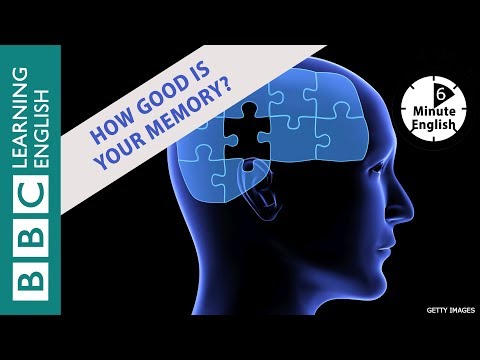
This episode of BBC Learning English's 6 Minute English series focuses on how reading reshapes the human brain. Hosts Becca and Georgie discuss a key insight from psychologist and neuroscientist Rebecca Gotlieb: because the brain has no dedicated "reading centre," it must borrow — or "co-opt" — regions built for vision, hearing, language, and attention whenever we learn to read. A particularly striking moment comes from the story of a bilingual man who suffered a stroke and lost the ability to read Chinese but could still read English, illustrating how different writing systems actually develop different brain circuits. The episode also references Marcel Proust's record-breaking novel of 1.3 million words as a fun quiz hook.
For shadowing practice, this episode is ideal. The two hosts speak in clear, natural British English at a measured conversational pace, and the expert audio clips offer slightly more academic vocabulary in short, well-formed sentences — giving learners two registers to practise in a single listen. Pauses between exchanges are natural and well-timed, making it easy to mirror rhythm and intonation.
This video suits A2–B1 learners who want to build everyday vocabulary around science and learning topics. Shadowing it will help learners practise connected speech in British English, get comfortable with compound noun phrases (e.g. "brain connectivity," "auditory processing"), and pick up confident ways to agree, respond, and recap information in conversation.
Idioms & expressions
find out — to discover or learn information, often at a later point. "We'll find out at the end of the programme."
at the moment — right now, currently. "I don't read very much at the moment."
talking all about — discussing a topic in full; an informal way to introduce a subject. "Today we're talking all about reading."
go with — to choose an option, especially when guessing. "I'm going to go with b) 1.3 million."
against their will — without a person's or thing's consent; forced into something. "Co-opt means to include someone or something, often against their will."
it's time to recap — a set phrase used to signal a summary or review is about to begin. "It's time to recap the language we learned during this programme."