"I can struggle to remember…" — using can to describe a general, habitual difficulty (not a one-time event). > "I can struggle to remember what I did at the weekend."
"I tend to do less important tasks in the afternoon" — tend to + infinitive expresses a personal habit or general tendency. > "I tend to do less important tasks in the afternoon."
"If I haven't slept well, then it's very hard to use my brain effectively" — a real conditional (Type 1 / habitual) using the present perfect in the if-clause to describe a recurring situation. > "If I haven't slept well, then it's very hard to use my brain effectively the next day."
"It depends" — a short, natural response used to signal that the answer varies by situation, without needing a full clause. > "Well, it depends. I can remember things that happened years ago…"
About this video
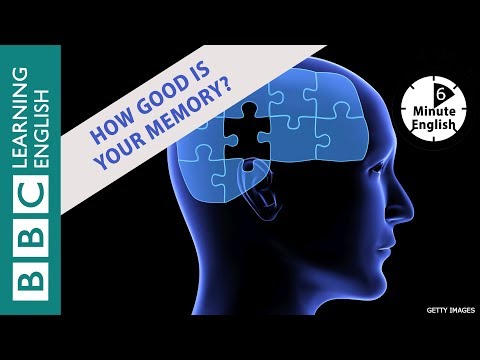
This episode of Real Easy English from BBC Learning English features hosts Georgie and Neil having a relaxed, natural conversation about their brains and minds. They share personal anecdotes — Neil recalls losing a quiz to his 15-year-old daughter because she said the answers faster, and Georgie describes a strange moment where a friend had to provide "evidence" to prove an event happened because Georgie had no memory of it at all. They also discuss practical habits: studying languages, reading, jigsaw puzzles, and exercise for keeping the brain active, as well as things that make the brain less effective, like too much screen time before bed and poor sleep.
For shadowing practice, this video is excellent material. The pace is deliberately slow and clear, the two speakers take turns in short, manageable exchanges, and the accent is standard Southern British English — easy to imitate and widely understood. Sentences are short and conversational, with natural fillers and everyday structures that mirror real spoken English rather than scripted dialogue.
This episode suits A2–B1 learners who want to build confidence speaking about everyday topics like health, habits, and daily routines. Shadowers will gain familiarity with common conversational phrases, the rhythm of natural British English, and vocabulary around memory and mental wellbeing.
Idioms & expressions
on the tip of your tongue — you almost remember something or almost have the word/answer, but you can't quite say it yet. > "The answers were on the tip of my tongue, but they just didn't get a chance to get out there."
on the spot — immediately, without time to prepare or think. > "I don't like it when people ask me my opinions of things on the spot."
keep your mind active — to do things that exercise your brain and prevent it from becoming slow or dull. > "We're going to talk about how we keep our minds active."
fresh and ready — alert, well-rested, and prepared (used here to describe the brain in the morning). > "It's the morning, so my brain is fresh and ready for the day."
That's life! — a casual expression meaning you accept something difficult or annoying as a normal part of living. > "Hey. That's life!"
get out of the house — to leave home and go somewhere, often for a break or for fresh air. > "It gets you out of the house, you get some fresh air."