Pronunciation scoring isn't supported on this browser — you can still record and listen back.
In1851,thePrussiangovernmentfeared
Translating…
Turn on Record to capture your voice and get scored
Line 1/80
Summary
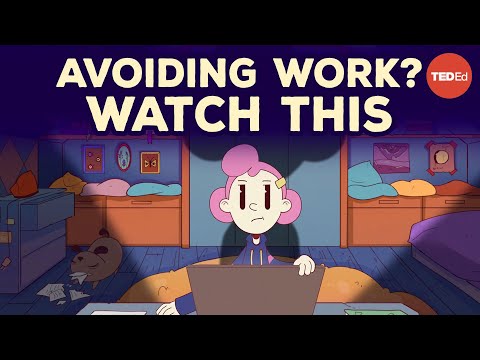
A TED-Ed video exploring how play-based education models like Montessori and Reggio Emilia challenge the traditional Prussian classroom system and why self-directed learning matters.
Contrast with "while" — Used to introduce an opposing idea in the same sentence without needing a separate clause. Example: "But while it might seem traditional now, the belief that play and learning are at odds with each other is a relatively new idea."
Passive voice for generalisation — The passive removes the actor to make a statement feel universal or institutional. Example: "Prussia banned kindergarten, enforcing a strict system of supervised classrooms and government-approved lessons." (and later) "…are rigorously designed to isolate and teach specific concepts."
Gerund phrases as subjects or objects — Gerunds (-ing forms) are used to describe activities as concepts. Example: "Its controversial curriculum included singing and dancing, gardening, painting, and playing."
"From … to …" structure for range — This pattern efficiently lists two extremes to imply everything in between. Example: "From rearranging the room to redirecting attention, teachers need to respond to each student…"
About this video
This TED-Ed video traces the surprisingly controversial history of play-based learning, opening with the striking fact that Prussia banned Friedrich Fröbel's kindergarten in 1851 out of fear it would inspire peasant rebellion. From there, it walks through how the Prussian model of supervised, government-approved lessons spread globally — and how educators have been pushing back ever since. Concrete examples ground the video throughout: Montessori classrooms using pink stackable blocks and brown staircase sets to teach spatial reasoning, and Reggio Emilia schools designing every corner of their rooms to "reward curiosity." The video closes with a 2023 analysis of 30+ studies showing Montessori students outperform peers in language, math, creativity, and social skills.
For shadowing practice, this video is an excellent choice. The narration is calm, clear, and delivered at a measured pace typical of TED-Ed animations — no heavy accent, minimal filler words, and well-structured sentences that are long enough to be a challenge without becoming overwhelming. The language moves fluidly between academic vocabulary and natural, conversational phrasing, giving learners practice with both registers.
This video suits B2–C1 learners who want to build confidence speaking about education, society, and research topics. Shadowers will gain exposure to formal discourse connectors (while, but for many, from … to …), passive constructions, and the kind of precise academic vocabulary that appears in essays, debates, and professional conversations.
Idioms & expressions
at odds with — in conflict or disagreement with something. "…the belief that play and learning are at odds with each other…"
fall behind — to progress more slowly than others; to fail to keep up. "…leading some students to fall behind."
weaving in — gradually and naturally incorporating something into something else. "…weaving in their curriculum along the way."
hone — to sharpen or refine a skill through practice. "…use Fröbel's special toys to hone their design principles and spatial reasoning."
buckets of — a large amount of (informal/emphatic). "This requires buckets of emotional intelligence, prep time, and trust…"
left behind — neglected or not given attention; not covered. "…to ensure no subject is left behind."
go beyond — to extend further than a stated limit or expectation. "And these benefits go beyond early learning."