Pronunciation scoring isn't supported on this browser — you can still record and listen back.
-CanyouunderstandmewhenIspeakEnglish?
Translating…
Turn on Record to capture your voice and get scored
Line 1/256
Summary
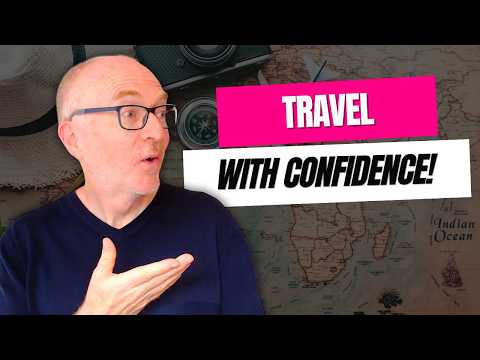
Keith from the Keith Speaking Academy teaches key conversational signposts — phrases native English speakers use to start, steer, and end real conversations.
Echo questions — Repeating part of what someone said as a question to show surprise or ask for confirmation. "I'm getting married." → "You're getting married?"
Question-word stress at the end — Placing what / how / why at the end of an echo question to intensify surprise. "You're going to have a what?"
Modal verb 'might as well' — Used to suggest an action because there is no strong reason not to. "You might as well apply for that job."
Present continuous for planned future — Using present continuous to describe an upcoming personal event. "I'm going to have a baby." / "We're going to the cinema on Saturday."
About this video
This video, hosted by Keith of the Keith Speaking Academy, teaches learners the "signposts" that native English speakers use to navigate real conversations. Rather than focusing on grammar rules, Keith walks through eight practical conversational functions — starting a topic ("Have you heard about…? What's your take?"), agreeing ("That's what I'm talking about"), disagreeing politely ("That's all well and good, but…"), making suggestions, interrupting ("Can I just say…" / "Forgive me, but…"), changing and returning to topics, persuading ("You've got nothing to lose"), expressing surprise with echo questions, and ending conversations ("Let's wind this up" / "At the end of the day…"). He even touches on cultural differences, noting that British speakers tend to signal before interrupting, while Spanish or Italian speakers may talk over each other more freely.
For shadowing, this video is an excellent choice. Keith speaks at a clear, measured pace with a natural British accent and uses frequent pauses, repetition, and on-screen swoosh cues that act as natural shadowing breaks. His language is conversational but precise, and he often models phrases two or three times in a row, giving you multiple chances to repeat.
This suits B1–B2 learners who can already hold simple conversations but struggle to follow or participate in fast-moving native-speaker discussions. By shadowing this video, learners will absorb a ready-to-use toolkit of spoken English phrases and gain the rhythm and intonation patterns of real British conversational English.
Idioms & expressions
What's your take? — What is your opinion or point of view on this?
kick off (a conversation) — To start or begin something, especially a discussion or event.
keep up — To follow along at the same pace; to not fall behind in understanding.
That's all well and good, but… — A polite way of acknowledging an idea before disagreeing with it.
Yes, and what's more — Used to add an extra, often stronger, point to what has just been said.
You've got nothing to lose — There is no risk involved, so you should try it.
Let's wind this up — Let's bring this to a close / finish this meeting or conversation.
At the end of the day — Ultimately; what matters most when everything is considered; also signals the speaker is done discussing.