Turn on Record to capture your voice and get scored
Line 1/278
Summary
Researcher Qian Janice Wang explores what "complexity" really means in wine tasting, blending psychology, sensory science, and two Oxford/Madeira experiments.
Conditional for hypothetical framing — Using "if" clauses to propose thought experiments, common in academic speech. "If I have two wines and I make a 50/50 blend, surely the blend should chemically be more complex."
Modal verbs for hedging — Speakers use "might," "could," and "should" to present findings cautiously rather than as absolute facts. "People are going to think it's more complex, and they might like it more."
Passive voice for scientific reporting — Results and procedures are described impersonally to sound objective. "They were not told which one was which."
Fronted adverbials as discourse markers — Phrases placed at the start of a sentence to signal contrast or sequence. "On the other hand, if something is too complex, people also don't like it."
About this video
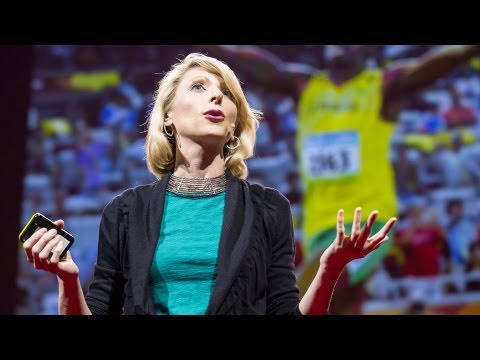
In this TED talk, wine researcher Qian Janice Wang unpacks the deceptively simple question: what does it mean when someone calls a wine "complex"? She walks the audience through two real studies — one at the University of Oxford comparing blended versus single-variety red wines in a blind tasting, and one conducted in Portugal using black glasses and aged Madeira wines (3, 10, and 20 years old) from Justino's Winery. A standout moment is the animated "flavor trajectory" video showing how experts and novices track taste differently over 30 seconds in the mouth. Wang distinguishes between chemical complexity (what's actually in the glass) and psychological complexity (what the drinker's mind constructs), and she introduces the Berlyne curve — an inverted-U showing how people prefer a "sweet spot" of complexity. Surprisingly, she reveals that it was wine beginners, not experts, who could better identify blends in the first study.
For shadowing practice, this talk is excellent material. Wang speaks at a measured, academic-but-conversational pace, with very clear enunciation and a slight international accent (English as a second language), making her easy to follow. She uses rhetorical questions, hedging language, and transitions typical of formal spoken English — all high-value patterns for learners to internalize.
This video suits upper-intermediate to advanced learners (B2–C1). It rewards shadowers with scientific vocabulary, polished discourse markers, and the natural rhythm of a well-structured academic presentation. Learners will gain confidence with hypothesis framing, result-reporting language, and the kind of nuanced vocabulary found in professional and academic contexts.
Idioms & expressions
in the eye of the beholder — used to say that judgements of quality are subjective and personal ("beauty in the eye of the beholder")
sweet spot — the ideal or optimal point between two extremes ("there's a sweet spot in the middle, like an ideal complexity")
higher than chance — performing better than random guessing would predict ("beginners could guess blends or not higher than chance")
walk you through it — to explain something step by step ("let me just talk you through it really quickly")
come back to — to return to a topic or experience for further examination ("the more times you can return to a glass of wine and find something different")
at any moment in time — at any given instant; used to describe a snapshot in a continuous process ("how many different flavors do you perceive at any moment in time")
slow down and stop — to deliberately reduce pace and be more mindful ("just take some time to slow down and stop and think about how the flavors are evolving")