Pronunciation scoring isn't supported on this browser — you can still record and listen back.
ChrisAnderson:Greattoseeyou,welcometoTED.
Translating…
Turn on Record to capture your voice and get scored
SubtitlesLine 1/183
Summary
Silvana Konermann explains how combining CRISPR, single-cell RNA sequencing, and AI could decode the language of human cells and transform treatment of complex diseases like Alzheimer's.
Key vocabulary
perturbationsingle-cell sequencingRNA expressionCRISPRgenomemicroglialarge language modelupregulaterisk factorstarget identification
Grammar notes
Present perfect for ongoing relevance — used to connect past work to the current moment, emphasising accumulated experience. "I have been doing science now for more than 20 years."
Hedging with "I think" / "I would say" — speakers soften claims or opinions to sound measured rather than overconfident. "I think that within four years, five years, we will be able to have these models that are accurate enough to be useful."
Conditional for hypothetical outcomes — the zero/first conditional is used to describe likely scientific scenarios. "If I have this cell, and I make this change, what happens to the cell?"
Fronted adverbials for emphasis — placing a time or topic phrase at the start of a sentence to signal a shift in focus. "And really what we learn, again, for large language models, is just they're very hungry."
About this video
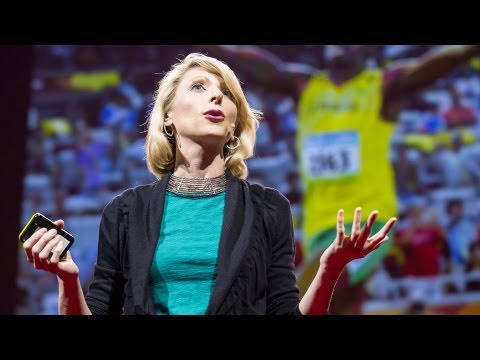
This TED talk is a candid interview-style conversation between host Chris Anderson and biologist Silvana Konermann, who opens by sharing a photo of herself at 15 — a self-described science-obsessed teenager in Switzerland who talked her way into a lab and went on to win a national and European competition. The heart of the talk is her plan at Arc Institute to run one billion physical CRISPR experiments over four years, perturbing one gene at a time in individual cells and capturing the RNA output, in order to train an AI model that can predict how any human cell will respond to any change — essentially a "universal virtual cell." She uses a striking analogy: just as large language models learned to understand human language by ingesting vast text, an AI can learn the "language of the cell" (RNA) if given enough measured, labeled biological data.
For shadowing, this video is excellent material. The pace is conversational but measured — two confident, articulate speakers take turns in a natural back-and-forth rhythm, with clear pauses and well-structured sentences. Silvana speaks in lightly accented but very clean American-influenced English, and Chris models smooth interview English with rhetorical questions and natural hedges. The register moves between accessible analogy ("like predicting language") and precise scientific vocabulary, giving learners rich variety in a single session.
This suits B2–C1 learners — particularly those interested in science, technology, or academic English. Shadowers will practise interview discourse patterns, hedging language, expressing enthusiasm, and explaining complex ideas simply — all highly transferable speaking skills.
Idioms & expressions
get really bogged down — to become stuck and unable to make progress, often due to over-focus on one thing. "A field like Alzheimer's can get really bogged down by just focusing on one dominant hypothesis."
guess and check approach — an informal method of trying something, seeing if it works, and repeating; used here to criticise slow drug-discovery methods. "The way this target identification works today is really this kind of guess and check approach."
at the forefront of — leading or most advanced in a particular area. "AI is at the forefront of everything, especially today."
behind the scenes — working in a way that is not visible to the public. "I am very much, usually behind the scenes."
keep in mind — to remember something as important when thinking or deciding. "I think the key thing to keep in mind is that this is really just for human cells."
spits out — (phrasal verb, informal) produces or generates a result quickly. "It spits out these different changes that you can make to the cell."
stuck with me — (phrasal verb) remained strongly in one's memory or thoughts. "That really stuck with me because why didn't we understand how it's starting?"