Past continuous for scene-setting — used to paint a vivid background picture at the start of a story: "I had my Hermes 3000 typewriter with me… I also had a shoulder bag of zinc plates, which I planned to engrave over the break."
Past perfect for backstory — signals events that happened before the main narrative moment: "after he had forsaken his traditional saffron robes to mitigate first impressions."
Rhetorical questions for audience engagement — a TED-talk technique that pulls listeners in: "Have you ever traveled with a bag of zinc plates?" and "What does that even mean?"
Conditional for hypothetical reflection — Patchett uses second conditionals to invite the audience to imagine scenarios: "If you're interested in living in a society where people read, it's also your responsibility to cultivate readers."
About this video
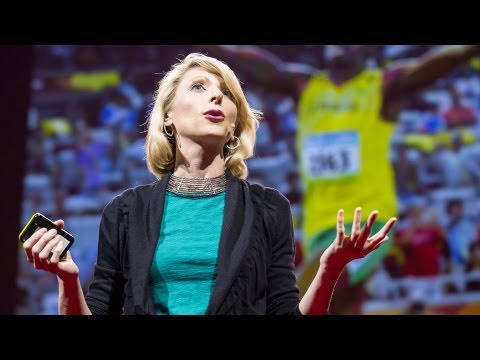
In this TED Talk, novelist and bookstore owner Ann Patchett opens with a vivid personal memory: arriving at Chicago O'Hare in 1986 as a 22-year-old graduate student, lugging a 14-pound Hermes 3000 typewriter and a shoulder bag of zinc plates, only to be rescued by a Hare Krishna who carried her bags across the airport and waited with her through a two-hour flight delay. That unexpected conversation — in which the Hare Krishna explained his willingness to stand all day in an airport just to share God's love — became the lens through which Patchett frames her own passion for books and her decision to open Nashville's Parnassus Books in 2011. She argues that reading builds empathy, preserves a "long-format brain," and creates community, and she calls on listeners to actively cultivate readers in society.
For shadowing practice, this talk is excellent material. Patchett speaks at a natural but measured pace, with a clear American accent and crisp enunciation — ideal for learners who want to practise storytelling intonation, rhetorical pauses, and audience-directed questions (e.g. "Have you ever traveled with a bag of zinc plates?"). The language moves fluidly between warm personal narrative and persuasive argument, giving learners exposure to both registers.
This video suits B2–C1 learners. The vocabulary is rich but contextual, and the sentence structures range from short punchy declarations to longer metaphorical passages (the "threads and tapestry" analogy). Learners will gain confidence with spoken American English, narrative past tenses, and the kind of eloquent, conversational rhetoric typical of TED Talks.
Idioms & expressions
make a break for it — to suddenly run away or escape, used humorously about a child bolting from the children's section: "when a child makes a break for it, you have the maximum opportunity to catch her."
bolt — to leave suddenly out of fear or discomfort: "I lacked the courage to bolt."
stick with it — to continue doing something even when it feels difficult: "it may feel strange at first, but stick with it."
show up — to appear or be present, often despite obstacles: "still he kept showing up because God's love was the greatest thing he had ever known."
laid my burdens down — put down the heavy things he was carrying (also a spiritual metaphor): "The Hare Krishna laid my burdens down and said he'd wait with me."
find my way — to navigate or discover one's direction, literally and figuratively: "I would thank him for helping me find my way."
hobbling towards the dust heap — moving slowly toward irrelevance or extinction: "books themselves are hobbling towards the dust heap of cultural irrelevance."