Turn on Record to capture your voice and get scored
SubtitlesLine 1/124
Summary
Palestinian-Swiss peacebuilder Hiba Qasas argues that lasting peace requires principled pragmatism and self-interest — not idealism — and shares her STIR framework through real Israeli-Palestinian dialogue work.
Key vocabulary
peacebuildinglegitimacypragmatismtransactionalismmediationpolarizationoccupationradicalizationcoalitioninflection point
Grammar notes
Parallel structure in contrast ("not X, but Y") — Used repeatedly for rhetorical impact and clarity. Example: "My answer is not by countering power with idealism, but with principled pragmatism."
Present perfect for ongoing relevance — Connects past experience directly to the present moment. Example: "I have spent the last four decades in the reality of conflict."
Conditional with "either…or" — Frames high-stakes binary choices to add urgency. Example: "We either break this cycle or condemn both our people to a perpetual state of loss."
Noun phrases as definitions (apposition) — A term is immediately redefined with a compressed noun phrase. Example: "principled pragmatism… self-interest with a spine."
About this video
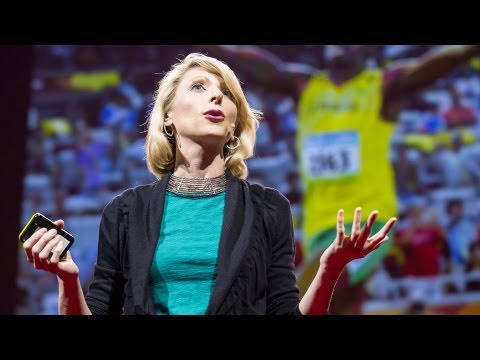
In this TED talk, Hiba Qasas — a Palestinian-born, Swiss-based conflict resolution professional with four decades of lived and professional experience — makes a bold case against what she calls "overly bureaucratized peace." She critiques the familiar Western peacebuilding toolbox (elections, police training, grassroots dialogues, reports) as mistaking process for progress. Drawing on a vivid and painful personal memory — being sent to a feel-good Israeli-Palestinian youth dialogue in Europe as a 19-year-old, only to return home to the Second Intifada — she explains why empathy alone fails. The talk's centrepiece is her STIR framework (Self-interest, Transaction, Recognition, Humanity), which she applied in a real room of 76 Israeli and Palestinian leaders just weeks after October 7. That coalition, Uniting for a Shared Future, grew to 550+ leaders and jointly briefed the UN Security Council.
For shadowing practice, this talk is excellent material. Qasas speaks at a measured, deliberate pace — typical of a polished TED delivery — with very clear, standard International English that is easy to parse phonetically. She uses sophisticated rhetorical structures (lists, analogies, repetition) that reward imitation, alongside occasional dry humour (the hummus jokes) that teaches natural tonal shifts.
This video suits upper-intermediate to advanced learners (B2–C1). Shadowers will gain exposure to formal policy and diplomacy vocabulary, persuasive rhetorical patterns ("not X, but Y"), and the confident, authoritative speaking style needed in professional or academic English contexts.
Idioms & expressions
the last resort — the final option, used only when everything else has failed
tick an inclusion box — do something merely to appear to meet a requirement, without real commitment
mistake process for progress — confuse being busy with activity for actually achieving meaningful results
in the hot seat — in a position of pressure, responsibility, or difficulty
the usual suspects — the predictable or expected people/things in a given situation
not see eye-to-eye — to disagree or have different views on something
a lid on a boiling pot — a temporary, fragile cover over a problem that is still building pressure underneath
the status quo — the current or existing state of affairs