Contrast with "on the other hand" — Used to pivot between two opposing ideas in a balanced, formal way. "Intelligence is all about doing… Consciousness, on the other hand, it's all about feeling and being."
Negative inversion for emphasis ("not X, but Y") — A rhetorical structure that rejects one idea and asserts another, common in persuasive speech. "It's life, not computation, that breathes the fire into the equations of experience."
Epistemic hedging with adverbs — Seth uses adverbs like "very unlikely," "vanishingly unlikely," and "at least in some ways" to qualify strong claims precisely, a key feature of academic and intellectual English. "Artificial intelligence… is vanishingly unlikely to actually be conscious."
Conditional structures to test hypotheses ("if… then…") — Used repeatedly to walk the audience through logical consequences. "If the fine details of the brain do matter for consciousness, well, wouldn't this be enough for consciousness to happen inside a machine?"
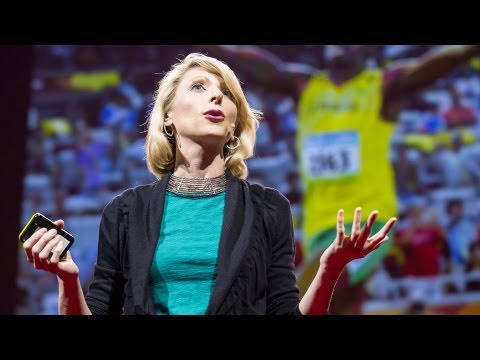
About this video
In this TED talk, neuroscientist Anil Seth makes a bold, well-reasoned case that artificial intelligence — including large language models like Claude and GPT — is not conscious and is very unlikely to ever become so under its current form. He opens with vivid cultural references, from Mary Shelley's Frankenstein to the film Ex Machina, before drawing a sharp distinction between intelligence ("all about doing") and consciousness ("all about feeling and being"). A memorable moment comes when he shows a photo of Mother Teresa's image appearing in a cinnamon bun to illustrate how humans are psychologically wired to project faces and inner lives onto things — including AI. He also challenges the dominant metaphor of the "brain as computer," arguing that biology, metabolism, and the deep entanglement of what the brain does with what it is means consciousness is rooted in life itself, not computation.
For shadowing practice, this talk is excellent material. Seth speaks in clear, measured British English at a confident TED-style pace — not too fast — with well-structured sentences, deliberate pauses, and strong rhetorical rhythm. He regularly uses lists of three and contrast structures ("not X, but Y"), which are great patterns to internalize.
This video suits upper-intermediate to advanced learners (B2–C1). Shadowers will gain exposure to academic and philosophical vocabulary, persuasive spoken discourse structures, and the kind of nuanced, hedged language ("very unlikely," "at least in some ways") that characterises intelligent public speaking in English.
Idioms & expressions
fantasy about playing God — to try to create or control life in a way that only a divine being should, often with dangerous consequences
around the corner — happening very soon; imminent ("who knows what's around the corner")
under the hood — referring to the internal, technical workings of something, hidden from ordinary view ("under the hood, it's not much different from Claude or GPT")
pull one's psychological strings — to trigger deep emotional or cognitive responses in someone ("AlphaFold just doesn't pull our psychological strings in the same way")
off the table — no longer a possibility being considered ("conscious AI is off the table, at least for AI as we know it today")
a far cry from — very different from; much worse or lesser than ("A far cry from the simplified, cartoon-like neurons that power today's AI")
keep regulators at bay — to prevent authorities or oversight bodies from interfering ("it might keep share prices aloft and regulators at bay")
sell our minds to — to surrender our most human qualities or judgment to something else, used here figuratively ("let's not sell our minds so easily to our machine creations")