Turn on Record to capture your voice and get scored
Line 1/170
Summary
An investigation into the global World Cup jersey market, comparing authentic licensed replicas, expensive official jerseys, and counterfeit knockoffs flooding factories in Bangladesh and street markets worldwide.
Present perfect + quantity—establishing context — "Millions of World Cup soccer jerseys are streaming out of factories in Bangladesh" and "Nearly 18% of all football jerseys sold globally are fake." This structure sets up the problem before diving into details.
Comparative structures with adjectives — "The authentic version actually feels way heavier than the fan replica, which was just light, super light." Notice the emphasis through repetition and the informal "way heavier" for colloquial clarity.
Passive voice for describing processes — "Workers first turn yarn into fabric using massive circular knitting machines" and "the fabric looks cheap and appears digitally printed with no real texture or depth." Common in manufacturing and quality-check explanations.
Conditional + outcome ("If...it...") to warn — "If a deal seems too good to be true, it likely is." Used here to guide consumer behavior.
About this video
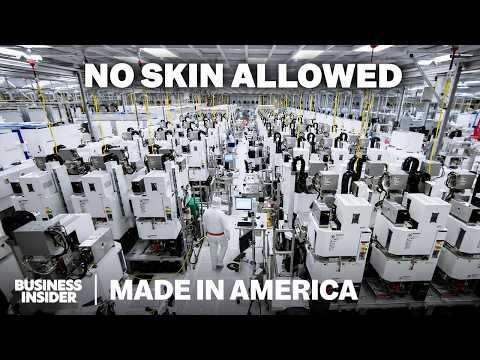
This Business Insider video examines the economics and mechanics behind World Cup soccer jerseys—from legitimate manufacturing in Bangladesh garment factories to illegal counterfeiting operations. The video follows a jersey through its journey: first showing how Epyllion Style, a major factory, produces 90,000 official FIFA-licensed replicas for Marks & Spencer over six months, involving 80 workers per shirt. It then compares three tiers of jerseys (replicas at $119, authentic at $180, and fakes at $20–25) and reveals where the money actually goes—retailers take 35%, brands keep 25%, marketing consumes huge chunks, and FIFA collects licensing fees. The investigation moves to Canal Street to buy a counterfeit and examine its tell-tale flaws: cheap fabric, digital printing, missing serial numbers, and faulty stitching. Finally, it reveals how illegal factories like Advergo churn out 10,000 fakes per day at $4 wholesale, using heat presses to fuse logos directly onto fabric, making them nearly indistinguishable to casual buyers.
This material is excellent for shadowing because the presenter maintains a steady, clear pace with frequent pauses between ideas, uses straightforward business terminology explained in plain language, and includes natural conversational elements ("What?", "Thank you so much") that feel authentic. The vocabulary mixes accessible everyday words with specific industry terms (hologram, proprietary, textile), making it challenging but learner-friendly.
Best suited for B1 learners. Viewers will encounter realistic business English, comparison structures ("more comfortable fit as they're designed for everyday wear"), and practical descriptive language about manufacturing and product details. The video builds speaking confidence through repetition of similar sentence patterns and exposure to how English speakers explain complex supply-chain concepts clearly.
Idioms & expressions
cracking down on — taking strict enforcement action against something illegal or unwanted; "authorities around the globe are cracking down on fake jersey shipments"
a safe bet — something expected to succeed or be reliable; "a team that looks like a safe bet one day can become a liability the next"
at first glance — when you first look at something, before examining it closely; "At first glance, it looks like the real thing"
a huge chunk of — a large proportion or substantial amount; "A huge chunk of the money goes into marketing"
read all about it — an old-fashioned expression announcing breaking news (used here humorously in an ad); "Extra, extra, read all about it"
gets in on the trend — joins or participates in something popular; "Dogs are even getting in on the trend"
sold out — all items have been purchased and are no longer available; "within hours of selling out, the jerseys were already showing up on eBay"